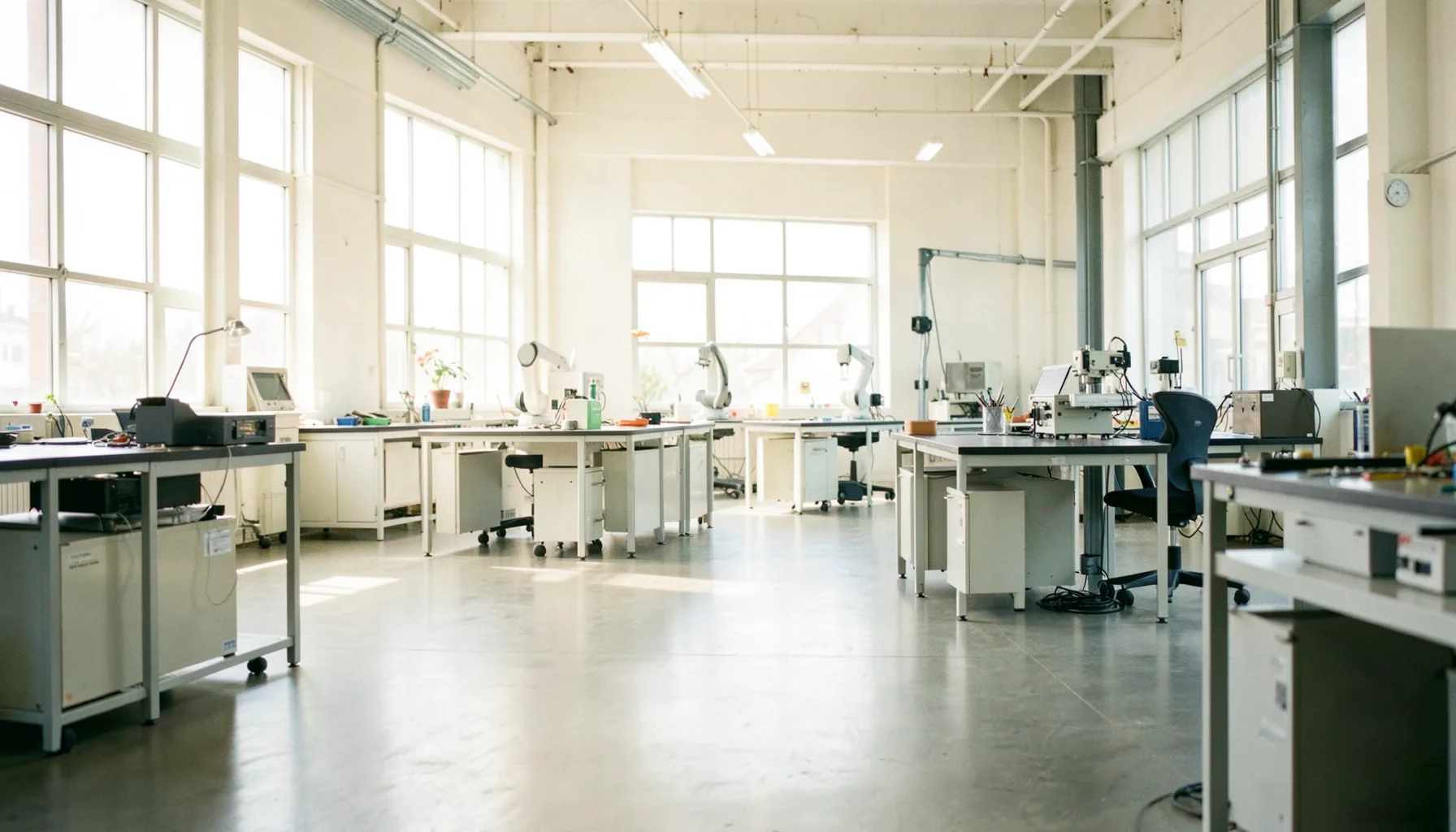
What to document during a robotic process pilot run
A robotic process pilot run is your chance to see whether automation pays off before committing serious capital. For small and medium-sized operators in Australia — from a bottler in Penrith to a fabricator in Campbelltown or a food packer in Thomastown — these short trials are where the rubber meets the road. The trouble is that many businesses rush in, switch the cobot on, watch it cycle, and call it done. What they miss is the paperwork. The records you keep during the trial decide whether the project scales, whether a subsidy claim holds up, and whether your team trusts the new gear.
Documentation is not glamorous, but it is the spine of every successful automation rollout. It captures the messy reality of how a robotic cell behaves in a real workshop with real products, real shift workers, and the occasional network dropout. Without it, the pilot becomes an anecdote rather than evidence. In Australia, where boards want hard numbers and Work Health and Safety obligations sit alongside production targets, anecdotes rarely carry the day.
The Shinagawa City government program connects local businesses with vetted technology providers and offers subsidy support. A structured pilot run, paired with the right records, gives you the data needed to apply for funding and brief leadership. The notes you take in week one often decide whether you scale in month six or quietly retire the equipment.
Set clear objectives and success measures before the cobot cycles
Every pilot needs a yardstick, written down before any hardware is powered up. Australian manufacturers often run lean, so the temptation is to skip the planning meeting and head straight to the demo cell. Resist that. Spell out what the trial must prove — throughput, labour relief, quality consistency — and pin the targets somewhere the crew can see.
Define success in measurable terms. If you are trialling a palletising cobot at a brewery in Geelong, "faster" is not a metric; "150 cases per hour with zero drop events over five days" is. Include softer measures such as energy draw, ease of shift handover, and time to operator competence. These indicators often decide whether the technology survives the next budget review. Decide upfront how long the pilot will run. Two weeks is rarely enough in a busy Australian plant; four to six weeks covers different products, operators, and at least one supply hiccup.
Capture the baseline of the current workflow
You cannot prove improvement without knowing where you started. Before the robot arrives, spend a week documenting the existing process in detail. Time each step, count the hand movements, log the rejects, and note every stoppage. Talk to the operators who actually run the line, not just the supervisors — the person folding cartons late on a Friday will have observations that never make a process manual.
Record daily output, staff on the line, wage cost per shift, and quality issues. In regulated sectors — food, pharma, medical devices — note the compliance checks between cycles. Australian regulators and major retail customers will ask for this baseline during audits, so capturing it now saves pain. The baseline is also your insurance policy if the pilot disappoints. A well-documented "before" picture lets you show the provider where the gap is and gives you leverage to renegotiate the configuration before signing the next stage.
Log the technical environment and integration points
Robots rarely fail because the arm is faulty. They fail because nobody recorded the network topology, the PLC version, the sensor wiring, or the air supply pressure. During a pilot, every integration detail needs to land in a shared document that both your team and the provider can update. Treat the trial as a controlled experiment and the cell as a lab.
Record the model and firmware of every controller, IP addresses of connected devices, and the credentials needed to log into each one. Photograph cable runs, safety scanner positions, and conveyor hand-off points. If your facility is on a regional link in a town like Ballarat or Wodonga, note the measured latency, not the advertised speed — latency is the silent killer of vision-guided systems. Note which systems the robot must talk to — MES, ERP, scales — and capture the API endpoints, data formats, and call frequency. When the pilot ends, this technical annex becomes the operating manual for whoever services the equipment next, and it is the kind of detail a what to expect during a city-funded technology assessment visit will usually request up front.
Record every exception, error and human override
The smooth runs are not where the learning happens. The exceptions are. Set up a simple log — even a paper notebook on the control cabinet door — and require operators to record every intervention. Was it a sensor false trigger, a misaligned pick, or a recipe change mid-shift? Each entry should capture the time, the operator's initials, what happened, and how it was resolved.
Categorise the entries as you go. Over a four-week pilot, patterns emerge: jam frequency on a particular product, vision failures under certain lighting, communication drops when the forklift passes by. These patterns tell you whether the technology is sound with minor tuning, or whether the application is the wrong fit for the product mix. Encourage a blameless culture when collecting this data. Australian shop-floor teams respond well to a fair go approach — nobody is in trouble for logging a fault, but everyone is expected to log it. The operator who admits a near-miss today is the one who prevents a Workers Compensation claim tomorrow.
Track the human experience and safety observations
A pilot that ignores the people fails on day ninety, regardless of how well the robot performed. Document how each shift adapted to the new equipment. How long did training take? Where did operators struggle? Did anyone raise ergonomic concerns, and were they addressed? Did the new cell improve or worsen traffic flow through the workshop?
Capture safety observations formally. In Australia, your Work Health and Safety obligations do not pause for a trial. Note the risk assessments, lockout procedures, and any near-misses. Photograph the guarding, light curtains, and emergency stop locations. If the provider has supplied any deviation from the standard design, get it in writing. Surveys work, but short structured conversations work better. Five-minute end-of-shift chats with two or three operators per week will surface issues a survey never will. Write the notes up the same day while the detail is fresh.
Build the financial picture as you go
Numbers build trust. Throughout the pilot, keep a running tally of every cost and every saving, even the small ones. Track consumables, additional compressed air, electricity, the provider's daily rate, and internal hours spent supporting the trial. On the saving side, record labour hours freed up, scrap reduction, and throughput gains expressed in dollars per shift.
Express the result in language finance teams understand: payback period, return on investment, and sensitivity to volume. A pilot that breaks even today but scales profitably at 110 percent throughput is a different story from one needing 140 percent. Make that sensitivity visible in the final report. Compare the financial picture against the baseline. That single table — before versus after — is usually the slide that gets the project approved, and the evidence your Shinagawa program advisor will want when you apply for subsidy support.
Practical documentation checklist for your pilot
- A one-page objective sheet with measurable targets, signed by the project sponsor before the trial starts.
- A baseline log covering at least five production days under normal conditions.
- A technical annex listing every device, firmware version, network address, and integration endpoint touched during the pilot.
- A daily exception and override log, categorised by cause and resolution.
- A financial summary comparing baseline cost per unit against pilot cost per unit, with sensitivity notes for different volume scenarios.
If you are ready to trial automation in your operation, the Shinagawa City government program can connect you with vetted technology providers and help fund the work. Reach out to the team today to scope your pilot and lock in the documentation framework before the cobot is bolted to the floor. A disciplined trial today is a competitive edge tomorrow.