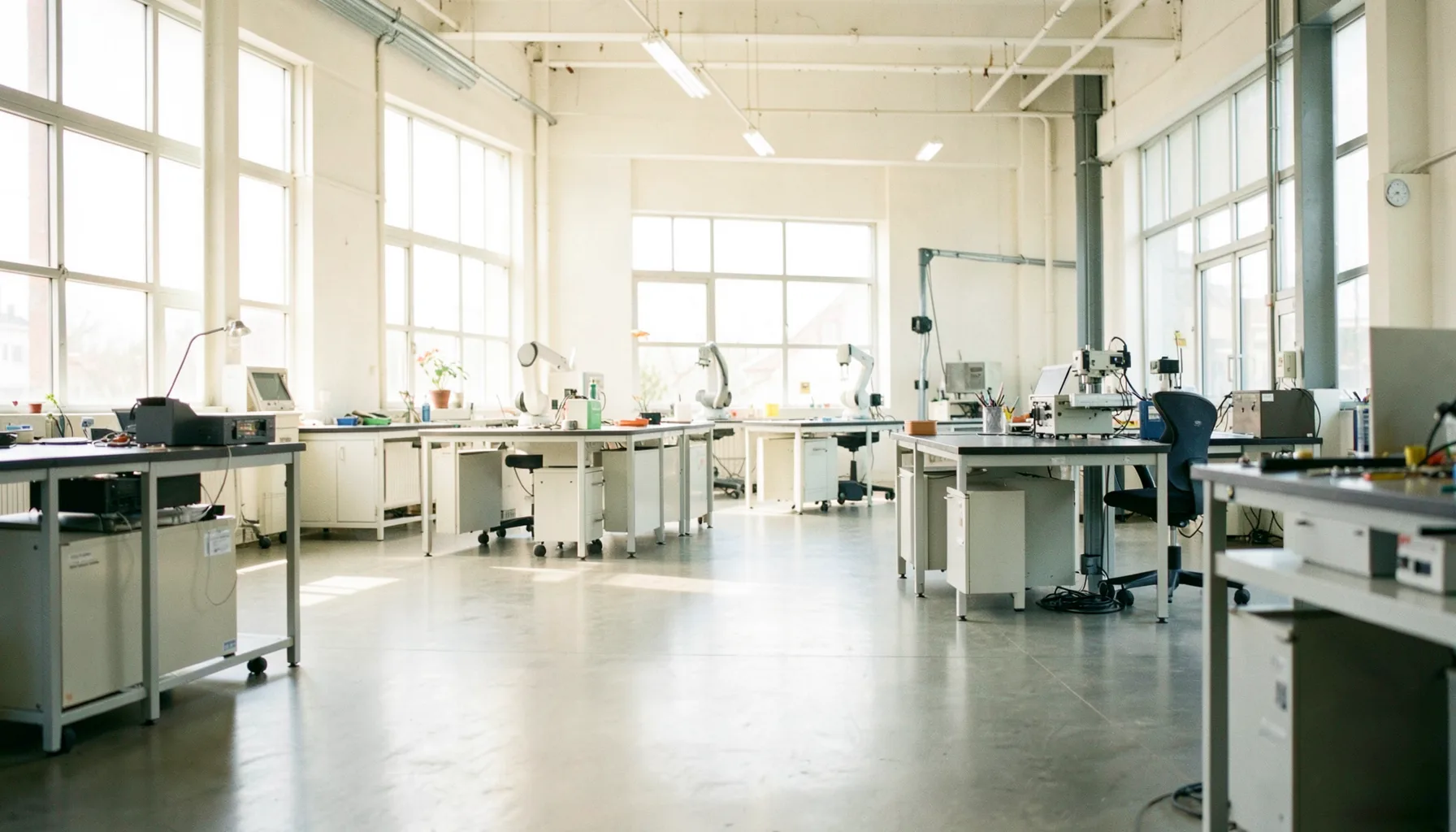
The 5S Method as a Prerequisite for Automation Projects
When manufacturers in Geelong and food processors in Brisbane decide to bring in robots and digital systems, many overlook the most fundamental step: getting the workspace itself ready. The Shinagawa City government programme that supports small and medium-sized businesses in automation, robotics and digital transformation has emphasised that technology alone rarely delivers the productivity gains it promises. Without orderly floors, labelled tools and standardised routines, even an advanced cobot becomes another piece of equipment waiting to fail.
The 5S methodology offers a reliable, low-cost starting point for any business planning its next round of automation or digital tools. Originating in Japanese lean manufacturing, the framework gives teams a shared vocabulary for tidiness, visual control and discipline. For Australian firms weighing an investment in robots, e-commerce platforms or fulfilment technology, running a 5S programme first almost always shortens the project, lowers the cost and reduces the risk of abandoned tools.
Origins and philosophy of 5S
The 5S method emerged from the Toyota Production System in the decades after the Second World War, when Japanese factories needed ways to rebuild quality while working with limited space, smaller batches and tighter margins. Engineers noticed that disorganised floors made every defect harder to spot, every changeover longer and every new operator slower to train. The discipline that solved those problems came to be known by five Japanese words beginning with S: seiri, seiton, seiso, seiketsu and shitsuke.
Over time, these ideas spread far beyond the car industry. Mining contractors in the Pilbara, pharmaceutical packers in Melbourne's south-east and apparel makers in Sydney now cite 5S as part of their continuous-improvement playbooks. The framework appeals because it requires little capital, scales from a four-person workshop to a thousand-person plant, and produces visible results within weeks rather than quarters.
Today's interpretation treats 5S as an ongoing cultural practice rather than a one-off spring clean. Visual management, gemba walks and standardised audit sheets are common features in Australian operations that have embedded the method deeply. When external auditors or technology vendors later walk through, the floor tells the story before anyone utters a word.
The five pillars in day-to-day operations
Each pillar answers a simple question about the workplace. Sort asks whether every item belongs: tools, paperwork, raw stock and obsolete machinery are separated into what is needed, what is rarely needed and what should go. Set in order then arranges the items that survived sorting so they can be found and returned in seconds, usually using shadow boards, labelled shelving and floor markings that match Australian WH&S colour conventions.
Shine turns cleaning into a routine inspection. Operators wipe down equipment, check for leaks and flag wear, transforming a tidy floor into a built-in condition-reporting system. Standardise captures the previous three pillars into checklists, photos and short standard-operating-procedure cards that any new starter can follow. Sustain is the pillar most often forgotten: it relies on audits, visual reminders and leadership walk-throughs to keep the previous four alive during busy periods.
| Pillar | Workplace question | Automation link |
|---|---|---|
| Sort | Do we actually need this here? | Removes dead sensors, fixtures and stock that confuse robot vision |
| Set in order | Can anyone find it in seconds? | Consistent totes and layouts let cobots pick reliably |
| Shine | Is the equipment also being inspected? | Daily cleaning doubles as condition monitoring for moving parts |
| Standardise | Does every shift do it the same way? | Stable inputs allow MES and ERP to trust production data |
| Sustain | Are audits and ownership in place? | Lock-in prevents drift that erodes the value of installed automation |
When a business adopts these habits, automation projects feel very different. Sensors can read clean labels, robotic arms can grip predictable totes, and software integrations pull data from forms that everyone fills in the same way. The discipline established in months of 5S work becomes the silent operating system for any technology layered on top.
Why workplace organisation must come before automation
Robots and software fail in cluttered environments for predictable reasons. A pick-and-place arm cannot reliably grasp packaging buried under loose strapping; an MES cannot reconcile inventory drawn from a dozen unmarked bins. Vendors selling automation to Australian factories often find their commissioning teams held up by basic visibility problems that a 5S programme would have addressed long ago.
The financial logic is straightforward. Automation kit typically arrives with installation windows of two to four weeks, after which the integration team bills by the day. A factory that has standardised its workstations, named its SKUs and kept the floor free of obsolete equipment will see its installation finish early and its team running production soon after. A factory without that preparation will burn budget on adjustments that should never have been required.
There is also a human side. Crews who have spent months building 5S habits trust that new systems will be supported by the same routines. They flag anomalies quickly, suggest workflow changes confidently and treat the technology as part of the team. Crews handed automation into a chaotic environment tend to view it as a foreign object, blame it for stoppages and disengage from the rollout before benefits are visible.
Pitfalls when teams skip the foundation
The most common mistake is treating 5S as a soft, optional activity while chasing the headline technology. A Sydney injection moulder learnt this the hard way after installing a vision system that kept rejecting good parts because a fluorescent workshop light flickered above an unlabelled inspection bench. Three months of calibration calls followed before someone simply shaded the bench and added a permanent fixture.
The second pitfall is short-term thinking. A 5S drive that ends with a ceremonial clean-up and a trophy for the tidiest aisle produces photographic evidence but no lasting change. Without scheduled audits, ownership assigned to specific roles and consequences for drift, the workspace quietly returns to its original state within a quarter. Vendors then enter a project expecting the discipline of a benchmarked facility and find themselves teaching basic housekeeping instead.
A third pitfall is data. Australian automation rollouts that pull information from spreadsheets, paper job cards and informal messaging apps struggle even when the floor itself is clean. Standardising how orders, batch records and quality notes are captured is a 5S exercise as much as a software one. Treating the two together prevents the situation where neat work stations still feed messy records into a brand-new ERP.
A step-by-step roadmap for Australian small businesses
A practical rollout begins with a one-day gemba walk involving the business owner, a shift supervisor and a frontline operator. Their job is to photograph the workspace, count the items that have not moved in six months, and identify the five activities that generate the most rework or delay. The findings are translated into a short action plan rather than a thick report.
The next phase picks a pilot area: usually a single production cell, packing bench or warehouse aisle. Sort and Set in order run first, with photographs taken before and after to make the change visible. Shine, Standardise and Sustain follow in two-week sprints, each producing a tangible output such as a colour-coded floor plan or a five-minute end-of-shift audit. Once the pilot holds for sixty days, the same playbook expands to the next area.
Local context helps. Operators in regional Queensland can use the slower winter months to launch pilots without disrupting peak harvest runs; Adelaide's defence and wine suppliers often align 5S campaigns with their annual audit cycle to leverage existing review rhythms. Funding support, including the Shinagawa programme's subsidy pathway for SMEs, can be reserved for the technology layer once the groundwork is proven.
Australian case examples worth studying
A small-batch cosmetics maker in Melbourne's inner west rebuilt its filling room using 5S before commissioning a volumetric filler. Within a year, changeover times dropped from forty minutes to twelve, and the team reclaimed enough space to install a second filler that doubled throughput without extending the lease.
A logistics operator servicing Adelaide Hills vineyards standardised its crate-handling zone, colour-coded each pick face and ran daily five-minute audits before adding robotic palletising. The integration completed two weeks ahead of schedule, and rejected-pallet rates fell sharply because every inbound crate now arrived at the robot in a predictable orientation.
Outside manufacturing, this florist automation case study shows how a small retail business sorted its vases, ribbons and stock SKUs into clearly named bays before deploying a tablet-based ordering system. The team was able to roll out the new software without weeks of retraining because the underlying inventory taxonomy was already clean and consistent.
Take the next step with the Shinagawa programme
Teams that complete a 5S foundation are usually ready to evaluate robotics, automation and digital tools with sharper questions and cleaner specifications. The Shinagawa City government programme supports small and medium-sized businesses through vetted technology providers, subsidy pathways to ease capital outlays, and practical seminars on factory digital transformation, IT investment and online sales efficiency.
For Australian businesses that want to trace 5S back to its Japanese roots, partners can fly via Komatsu Airport to reach manufacturing sites across Kanazawa and the surrounding prefectures. The programme's workshops in Shinagawa welcome international delegates each quarter, with interpreters and matched introductions to automation suppliers throughout Japan, while locally the team runs orientation webinars tailored to Australian small-business schedules.
Register for the next seminar, request a workplace readiness audit or apply for subsidy support through the Shinagawa programme portal to keep your automation project grounded in disciplined, well-organised operations.