Proof before purchase: running a useful robot trial
For Australian operators, direct language carries weight: when a vendor says a robot will save time, the common response is “show me it working.” That sets the standard for what a vendor should show you during a paid robot trial on your floor: observable performance, repeated under real conditions and tied to a job your business already performs.
Shinagawa City’s program helps eligible small and medium-sized businesses in the ward adopt automation, robotics and digital-transformation solutions. It introduces vetted technology providers, offers subsidy support for eligible implementation costs, and runs practical seminars on factory digital transformation, IT investment and online-sales efficiency. Australian operators should confirm local eligibility; municipal support in Shinagawa is not automatically an offshore grant.
Before equipment arrives, capture a baseline. Record order volumes, task times, error rates, operator interventions, existing bottlenecks and the distance materials travel between stations. This baseline turns “faster” into a measurable claim and gives you a fair comparison when the robot joins the workflow. It also prevents a vendor from selecting flattering tasks that conceal the real constraints.
The strongest trial exposes normal operating friction without creating an artificial crisis. It should include ordinary shifts, imperfect conditions and the people who will use the machine. If the equipment can perform only when conditions are controlled, neatly presented or unusually quiet, the business case will not survive contact with daily operations.
Start with your real job
Choose representative work rather than a favourable demonstration. A robot picking one standard carton is less revealing than a mixed load with varying sizes, labels and arrival patterns. In Australia, that might mean testing cartons from a Melbourne distribution centre, weekend e-commerce orders and a delayed supplier pallet during the same shift. Keep the workload normal, including the awkward pieces.
Put the operating details in the trial agreement. State who installs and calibrates the system, which data it needs, who trains staff, what support is included, how many hours it will run and what happens after the paid period. A fee that buys only access to a machine is not comparable with one that buys evidence. Clarify whether it can be credited toward purchase.
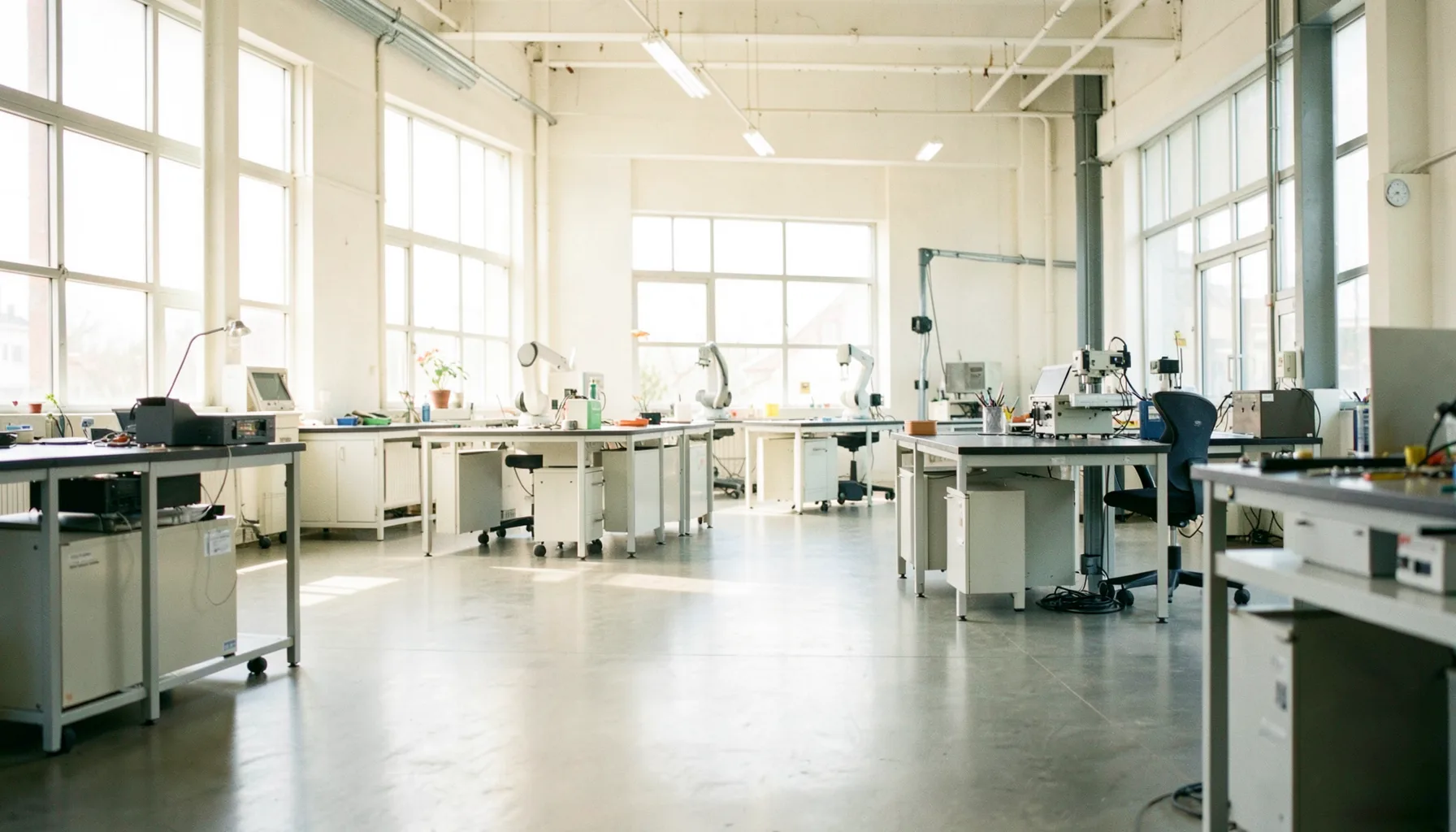
Check the physical workflow before the truck arrives. This robot-ready warehouse layout preview is useful for framing questions about aisle width, turning radius, dock congestion and pedestrian routes. Walk the route from goods-in to storage, picking and dispatch. A robot that needs perfect spacing, pristine floors or constant human staging may work beautifully in a demo but poorly in an ordinary warehouse.
Watch how the work really changes
Let your own people operate it. A trained vendor engineer can hide poor interfaces and slow handovers. Include an experienced operator, a newer employee and anyone working the adjacent station. Australian buyers tend to value blunt feedback, so ask for a short debrief: What felt awkward? Where did you intervene? Would you trust this on a night shift?
Treat ergonomics and safe work as trial results, not paperwork. Record manual lifts, reaching, pinch points, queueing and emergency-stop access. A trial in Japan cannot certify an Australian installation; a deployment in Australia still needs the relevant workplace health and safety, electrical and machinery controls. Ask which risk controls remain after automation and who verifies them on site.
Test the communication chain as well. Robots may call a warehouse management system, share status screens or depend on wireless coverage. This wireless network usage overview provides useful background on why connectivity deserves attention. Before the trial, map dead spots, agree what happens during an outage and confirm that no safety function relies on an unverified network connection.
Measure output, uptime and recovery
Agree the numbers before watching the robot. Useful measures include completed units per hour, end-to-end cycle time, errors, operator interventions, availability and time lost to exceptions. Record the same measures on comparable manual shifts. Define terms carefully: “uptime” can hide micro-stops, and “throughput” can ignore work waiting elsewhere. The paid trial should produce a signed result against predefined thresholds.
Run enough shifts to see reality. Include shift changes, peak order periods, mixed stock and one imperfect process, but do not manufacture a crisis. Australian SMEs often operate with lean teams, so absence of an available operator can matter as much as the robot’s speed. A system that needs a vendor specialist beside it for every cycle has not demonstrated a workable return on investment.
Keep the evidence in a form finance and operations can use. Request timestamped logs, intervention counts, incident notes and a comparison with the baseline, subject to workplace privacy and site-security rules. Separate labour saved from capacity released, then price the additional work: programming, integration, training, maintenance and consumables. For online-sales teams, calculate whether faster picking becomes fewer errors, faster dispatch or simply more orders.
Make safety, ownership and cost explicit
Put safety obligations in writing. The trial plan should identify guarding, exclusion zones, emergency stops, load limits, traffic rules and response steps for a failed cycle. Ask who holds responsibility for an incident and whether the trial is covered by insurance. Do not accept a generic certificate as proof that the equipment is suitable for your floor, traffic pattern and operator training.
Clarify support and ownership before the supplier leaves. Australian operations may need engineering support in Australian hours, spare parts held in Sydney, Melbourne or Brisbane, and a realistic answer for regional sites such as Wagga. Confirm response times, training refreshers, software subscriptions, calibration, consumables and who owns the data. For imported systems, include freight, customs, GST, currency movements and ongoing exchange-rate exposure in the comparison.
Examine the business case without promotional certainty. Although written about betting rather than robotics, this risk and return comparison usefully separates the size of a possible gain from the chance of realising it; a robot business case deserves the same candour. Ask for conservative, expected and stretch scenarios, then state what assumptions each requires. A vendor should never sell certainty where the trial has shown only a range.
Convert proof into a clear decision
Close the trial with a joint scorecard. Compare results with the baseline, list unresolved faults, record operator feedback and decide whether to proceed, extend the test or stop. Give partial credit where justified: perhaps cycle time improves but setup takes too long. That decision is more valuable than a vague endorsement, and it gives both sides a clear basis for any next stage.
If the trial passes, convert the findings into contract language. Attach the measured workload, acceptance thresholds, safety controls, software scope, response times, training plan and total cost of ownership. State what happens if production differs from the trial, how new staff are trained and when the subsidy or payment milestone affects the price. Leave no important promise in a sales engineer’s notebook.
If your business operates in Shinagawa Ward and is eligible, contact the Shinagawa City program to request a vetted-provider match and book a seminar or workshop. Give the provider your process map, baseline data and named floor lead before the paid robot trial begins, and require the agreed evidence to be part of the commercial proposal. Make the next investment only when the floor has already supplied the proof.