How a Shinagawa label printer automated collating and folding
A Shinagawa label printer automated its collating and folding process by redesigning the entire production flow around repetitive material handling. Rather than replacing one worker with an isolated machine, the business combined automated feeding, robotic picking, folding equipment and digital order checks to create a more consistent finishing line. Learn more about How To Maintain A Robot Arm On A Small Business Budget.
Before the change, printed sheets moved between machines before staff matched label sets, counted them, folded bundles and packed completed orders. Small variations in paper type or bundle size made each job slightly different, increasing handling time and the risk of missing or duplicated labels.
The project gained practical support from the Shinagawa automation program, which connects local businesses with vetted technology providers and subsidy assistance. Its seminars on factory digital transformation, IT investment and online sales efficiency also helped managers evaluate the project as a business system rather than simply a machinery purchase.
For small and medium-sized manufacturers in Australia, the case offers a useful model. Companies in Sydney, Melbourne and Brisbane can apply the same process-mapping principles while accounting for local labour shortages, compact production spaces and the need to protect cash flow during equipment upgrades.
The bottleneck before automation
The first task was to identify where value was being lost. Collating and folding looked simple because each step was familiar, but observation showed that employees repeatedly moved bundles between benches, checked printed quantities against paper tickets and searched for matching labels when several jobs ran concurrently.
The business grouped these activities into a production workflow and recorded cycle times, handling errors, operator interruptions and the number of orders completed per shift. This baseline prevented the project from becoming an equipment demonstration. It established which movements required automation and which decisions should remain under human control.
The team also considered product variety. A completely rigid system would have struggled when customers ordered different label sizes, paper stocks or fold patterns. The selected equipment therefore needed adjustable guides, configurable recipes and clear controls for operators working with short production runs.
Redesigning the collating and folding line
The redesigned workflow begins with printed sheets arriving in marked trays. A sensor confirms that the correct job is present, while the production system displays the required label quantity, fold pattern and destination bin for that order.
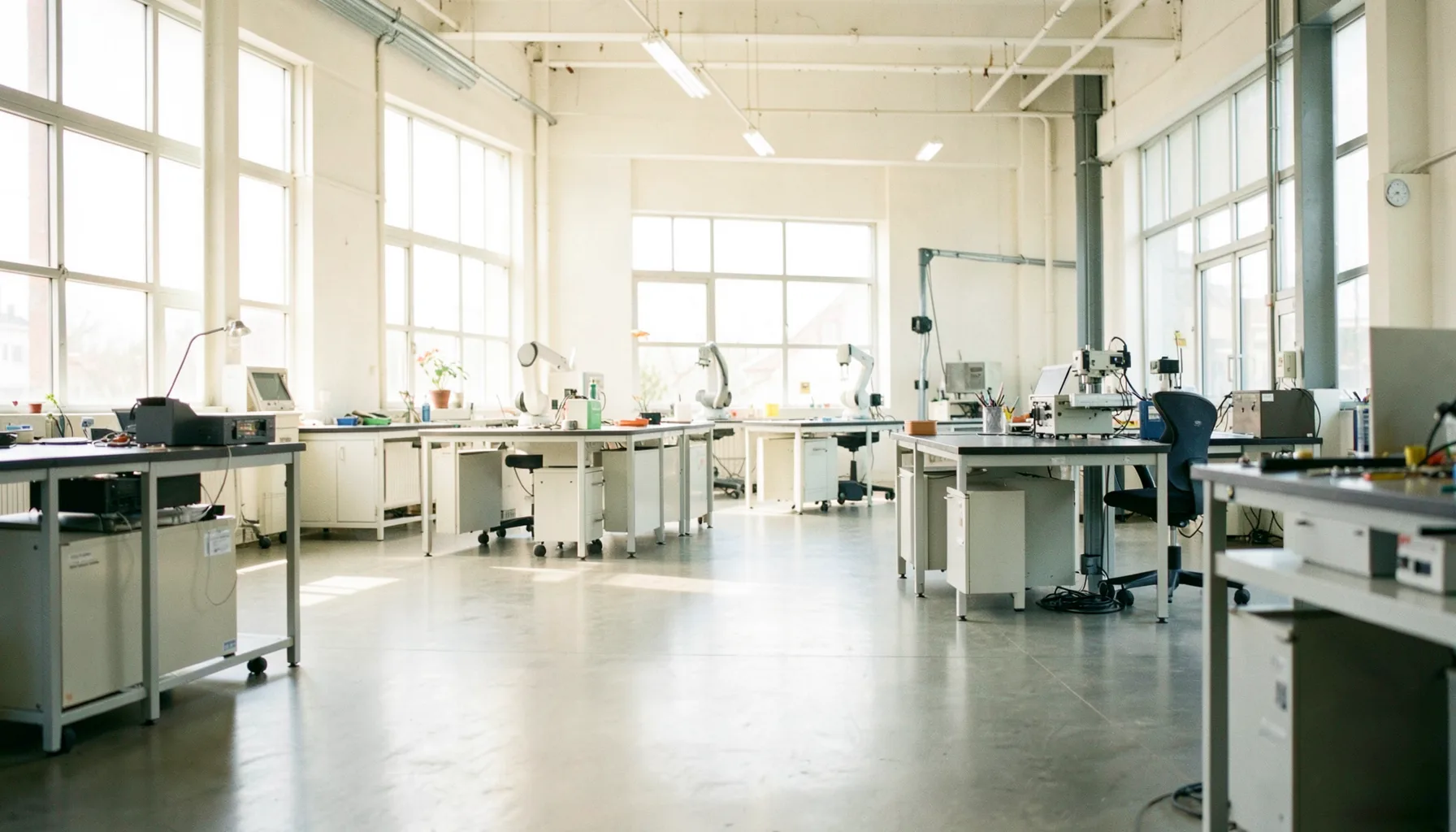
A compact robotic arm then transfers collated bundles from the staging area to the folding machine. Vision guidance or fixed positioning helps the robot place each bundle accurately, and rollers guide the material through the folding mechanism. This approach reduced manual picking while preserving flexibility for different jobs.
Quality control moved closer to the point of production. Count sensors check the completed bundle before it reaches packing, and exceptions appear on an operator screen rather than being discovered during final dispatch. Production status also returns to the order system, giving customer service staff a clearer view of which jobs are complete.
Broader supplier and peer perspectives available through Connections 2025 resources can help managers compare automation approaches beyond their existing vendor relationships. Demonstrations and business discussions are particularly valuable when a company is deciding whether a collaborative robot, a dedicated feeder or a semi-automatic line will deliver the right balance of capacity and cost.
Connecting equipment with business systems
Automation becomes more useful when its output can guide the next production decision. The label printer integrated job data with equipment controls so that operating settings and order quantities travelled together. Where full system integration was not practical, a controlled file exchange reduced manual re-entry and created an audit trail.
The digital workflow also supports exception handling. If a bundle count is incorrect, the line stops at that stage and identifies the affected order. An operator can inspect the material, correct the fault and restart without losing the settings for the remaining production queue.
For Australian businesses, digital investment should include cybersecurity and privacy planning. Customer and order data may be covered by the Privacy Act 1988 and the Australian Privacy Principles, while marketing emails must comply with the Spam Act 2003. Access controls, secure backups and documented retention periods should therefore be considered alongside production software.
Finance teams can also investigate eligibility for the federal instant asset write-off, which allows eligible small businesses to deduct qualifying assets costing up to AUD 1,000 in the year they are acquired. Larger equipment may qualify for the general small-business asset write-off, although tax treatment should be confirmed with an Australian accountant.
A practical rollout checklist
The Shinagawa project worked because implementation was divided into manageable stages:
- Map every movement from printed output to packed orders, including the manual checks hidden between major steps.
- Measure current cycle time, error rates and shift capacity before purchasing equipment.
- Choose flexible machinery suited to the actual mix of label sizes, stocks and fold patterns.
- Test robotic feeding and folding with the most difficult products rather than only standard jobs.
- Define how order data reaches the line and how production results return to the business system.
- Train operators in setup, fault recovery, cleaning and basic visual inspections.
- Establish maintenance ownership, spare-part availability and a response plan for equipment outages.
A short pilot prevented expensive assumptions. The team initially ran a limited number of orders through the new process, measured handling time and recorded operator feedback. Changes were then made to tray locations, grip settings and the sequence of automatic checks before wider deployment.
For manufacturers in Australian labour markets, the objective should be removing repetitive strain and releasing skilled staff for quality work and customer service. A robot that is difficult to maintain or requires specialist programming for every order may create more disruption than it removes.
Keeping the line reliable
The productivity gain depends on availability as much as speed. The business created a daily visual check covering feed sensors, grippers, rollers, guards and counting equipment. Cleaning routines were assigned to named operators, while more technical inspections followed a schedule based on operating hours.
This budget robot maintenance guide offers useful guidance for small companies planning a robotic arm without a large technical department. Preventive checks, sensible spares and staff training can reduce unexpected downtime, although the recommendations still need to match the manufacturer’s safety instructions.
Safe work remains central to the operating model. Australian employers must apply the model work health and safety laws in their state or territory, including risk assessment, isolation procedures and safe access around moving equipment. Emergency stops, light curtains, lockout points and clear exclusion zones should be tested rather than treated as paperwork.
Reliability also depends on the surrounding business environment. Many Australian SMEs buy equipment from a mixture of local distributors and imported suppliers, so spare-part lead times, exchange rates, freight costs and local technician availability belong in the investment calculation. A slightly slower machine with readily available parts may suit a small operation better than a faster system with a long downtime exposure.
Put the first process map to work
The Shinagawa label printer improved collating and folding by connecting material handling, production data and operator decisions into one controlled workflow. Its strongest lesson is that small businesses can achieve meaningful automation gains by starting with a specific bottleneck and designing around their actual order mix.
Businesses in Shinagawa can contact the programme to discuss subsidy support, technology providers and practical workshops. Australian manufacturers can begin by documenting the movement of printed material through their own finishing process, then test whether feeding, robotic handling or digital job control offers the clearest first step.